Can this skin growth be removed safely?
Dermatologist-led assessment and removal planning in Baner, Pune • Diagnosis first • OptiDerm Skin Clinic.
Does this sound familiar?
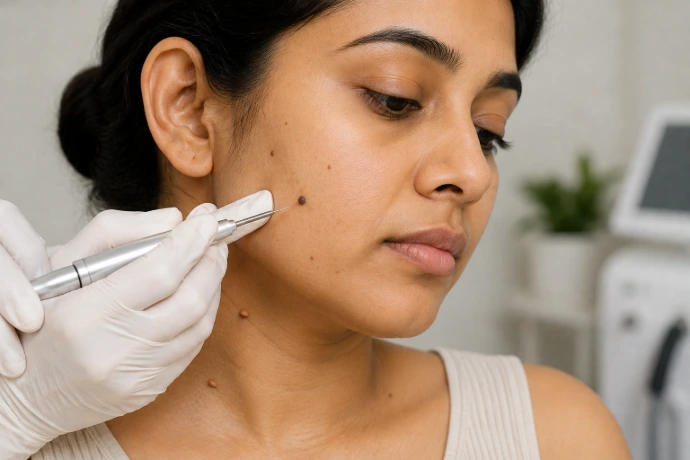
A raised mole, recurring wart, rubbing skin tag, or skin growth that has changed or causes discomfort?
Different skin growths can look similar. A dermatologist should identify the lesion before removal, especially when it is new, changing, bleeding, painful or repeatedly irritated.
Skin Growths We Assess
Moles • Viral warts • Skin tags • Seborrhoeic keratoses and other common growths. The diagnosis, location, size, number, symptoms and cosmetic goals guide whether and how removal is considered.

Your Four-Step Assessment & Removal Journey
Step 1: Dermatologist Examination—The lesion is assessed for its likely diagnosis, location, size, symptoms, duration and any concerning change.
Step 2: Removal Planning—Suitable options, expected scar, discomfort, healing, recurrence risk, cost and whether testing is advised are discussed.
Step 3: Procedure & Aftercare—Removal is performed with the selected method and clear wound-care or aftercare instructions.
Step 4: Review—Healing is reviewed when required, and further care or laboratory evaluation is discussed if advised.
What to Realistically Expect
Removal method and healing depend on the diagnosis, size, depth and location. Temporary tenderness, redness, crusting, pigment change or a scar may occur. Warts can recur, and some lesions should be sent for histopathology. No growth should be self-cut, burned or treated blindly.
Why Choose OptiDerm Skin Clinic?
Dermatologist diagnosis before removal, sterile clinical technique, method selection based on the lesion and transparent discussion of healing, scarring, recurrence, testing and cost.
Meet Dr. Shraddha Wankhede
Dr. Shraddha Wankhede is a Consultant Dermatologist with a Fellowship in Dermatology from Deenanath Mangeshkar Hospital, Pune, and a Fellowship in Aesthetic Medicine (UK).
At OptiDerm, mole, wart and skin-tag care begins with confirming what the growth is and whether removal is appropriate—not treating every bump as cosmetic.
Treatment Options & Safety
Depending on the diagnosis and location, removal may involve radiofrequency, electrocautery, cryotherapy, laser or minor surgical excision. Local anaesthesia and histopathology may be advised. The method, precautions and aftercare are explained beforehand.
Patient Feedback About OptiDerm Care
“Dr. Shraddha Tai is very knowledgeable, patient, and explained the entire procedure clearly. The staff is polite, supportive, and the clinic is clean and well-maintained.”
Individual experiences and treatment results vary.
Still Having Some Questions?
Have questions about moles, warts or skin tags?
Review the common queries below or contact OptiDerm for personalised guidance.
Chat with us on WhatsApp →
Pigmentation is a broad term for areas of increased colour. Melasma is a specific recurring pattern that commonly affects the face. A dermatologist can assess the pattern and likely causes.
Suitability depends on the diagnosis, depth, skin type, triggers and previous treatments. Options may include medical skincare, sun protection, peels or device-based procedures.
There is no single fixed number. The expected range and interval depend on the concern, selected treatment and individual response, and are discussed after assessment.
This varies by procedure. Some treatments may cause temporary tingling, redness, dryness or mild peeling. Personalised preparation and aftercare guidance is provided.
Warts can recur because they are viral. New skin tags can also develop over time, particularly in areas of friction. Follow-up may be recommended.
Cost depends on the diagnosis, number, size, location, method, anaesthesia and whether laboratory testing is advised. An estimate is provided after examination.
Ready to have the skin growth assessed?
Book a dermatologist consultation to identify the lesion and discuss whether removal is appropriate and which method may be suitable.
OptiDerm Skin Clinic, Baner, Pune • +91 91155 30255